New Canaan There & Then: Shoemaking

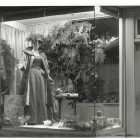
‘New Canaan There & Then’ is sponsored by Brown Harris Stevens Realtors Bettina Hegel, Joanne Santulli, Dawn Sterner and Pam Stutz. As many in New Canaan know, shoemaking dominated New Canaan’s economy for more than a century. 

It all began with the Benedict family, who began making rough, wooden pegged shoes in 1768. These durable shoes were popular with New York laborers and southern plantation owners, who purchased them for enslaved field workers. The Ayres family made higher quality sewn shoes that they shipped to out-of-state upscale retailers. At the height of this industry, New Canaan produced 50,000 pairs a year.

New Canaan There & Then: The Harvard Five

‘New Canaan There & Then’ is sponsored by Brown Harris Stevens Realtors Bettina Hegel, Joanne Santulli, Dawn Sterner and Pam Stutz. Many of us enjoyed the recent screenings of Devon Chivvis’ long-awaited film The Harvard Five, about the talented group of architects from Harvard’s Graduate School of Design who, with their professor Marcel Breuer, settled in New Canaan and built the innovative midcentury modern houses for which this Town is now famous. The film is a must-see. And while all of these architects went on to have illustrious careers, Philip Johnson is arguably the most famous of all. In 1906, Johnson was born in Cleveland, Ohio to a wealthy and educated family.

New Canaan There & Then: The Telephone Comes to Town

‘New Canaan There & Then’ is sponsored by Brown Harris Stevens Realtors Bettina Hegel, Joanne Santulli, Dawn Sterner and Pam Stutz. A fascinating article by Marshall H. Montgomery titled “It Deserves to be Celebrated or The First One Hundred Years of the telephone in New Canaan” appears in the 1981 Annual published by the New Canaan Historical Society. It provides a broad overview of the milestones in bringing telephone service to the town New Canaan. Here are some of the highlights:

The first telephone system began operating in New Haven, Connecticut in 1878, two years after Alexander Graham Bell patented the telephone. It had a switchboard and a directory printed upon a plain card.

New Canaan There & Then: The Freemasons

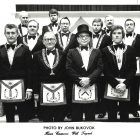
‘New Canaan There & Then’ is sponsored by Brown Harris Stevens Realtors Bettina Hegel, Joanne Santulli, Dawn Sterner and Pam Stutz. On the face of a dollar bill, there appears to be a pyramid with an eye at the top. Is this an illuminati, some other mysterious mythological symbol, or just an odd design? The truth is that this symbol comes from a brotherhood founded to promote self-improvement and a better world through the application of moral values, intellectual development, and mutual respect. 

They are the Freemasons, the world’s largest extant fraternity with deep ties to New Canaan. In 1733, a Great Lodge was established in Boston, marking the start of Freemasonry in New England.

New Canaan There & Then: Captain George J. Santry

‘New Canaan There & Then’ is sponsored by Brown Harris Stevens Realtors Bettina Hegel, Joanne Santulli, Dawn Sterner and Pam Stutz. New Canaan resident Captain George J. Santry identified an important European technology to create the precast concrete that was used to build the Thule Airfield in Greenland, a top-secret U.S. Department of Defense Cold War project. 

He then brought the material to the United States where it was used by notable New Canaan architects Philip Johnson for various projects and John Johansen for the U.S. Embassy in Dublin. 

George Santry was director of the Joint Export Import Agency (JEIA) in the Office of the Military Government under the Marshall Plan following World War II. In his efforts to identify materials to rebuild Europe, he was introduced to the Schokbeton precasting system. In the 1930s, the need for cheap building materials became a worldwide economic crisis and for concrete, cement was the most expensive component. A method to fabricate more dense concrete of the same strength using less cement and water was developed. 

In 1932 the Schokbeton firm was created and rapidly expanded into a worldwide company.