Update: The Jan. 28 event at the Playhouse has been postponed.
***
Original Article
The Domestic Violence Crisis Center of Connecticut, or ‘DVCC,’ is partnering with area organizations, including the New Canaan Abuse Prevention Partnership, to present a screening of the documentary “Beyond Survival.” The hour-long film will show at 7 p.m. on Wednesday, Jan. 28, at The Playhouse, and will be followed by a panel discussion (limited tickets here).
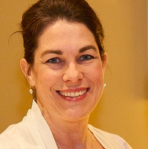
Suzanne Adam
One of those panelists is DVCC CEO Suzanne Adam.
We put some questions to Adam about domestic violence, as well as the event, ahead of the screening.
Here’s our exchange.
***
New Canaanite: Please tell us about DVCCCT. What services does the organization offer and, if possible, give us an idea of your reach and impact here in New Canaan.
 Suzanne Adam: The Domestic Violence Crisis Center or ‘DVCC’ has served victims of domestic violence and their children since 1980, providing counseling, advocacy, and life-saving support. DVCC is the only state-certified agency recognized by the Connecticut Coalition Against Domestic Violence or ‘CCADV’ serving Norwalk, Stamford, New Canaan, Darien, Westport, Weston, and Wilton.
DVCC’s mission is to prevent and eliminate domestic violence by educating communities and supporting individuals as they build safer lives. The organization envisions a world free of domestic violence and is grounded in the belief that safety is a fundamental right. DVCC is committed to creating a culturally inclusive environment where all individuals—regardless of background or identity—can access confidential, compassionate, and effective support.
DVCC assists individuals experiencing any level of domestic violence, helping them increase safety and stability for themselves and their families. Services include housing and financial advocacy, legal advocacy, trauma-informed individual and group counseling, and access to emergency safe housing. All victim services are free and confidential.
In New Canaan, domestic violence is one of the most serious and potentially lethal crimes, affecting individuals across all ages, backgrounds, and relationship types—whether involving a spouse, partner, or dating relationship. DVCC’s presence ensures that New Canaan residents have immediate access to expert support, advocacy, and prevention education, helping save lives and strengthen the safety and well-being of the community.
You have shared that domestic violence is often hidden in affluent communities. Why is that? What myths about domestic violence persist in communities like New Canaan? What are the consequences of those myths?
Several harmful myths persist in communities like New Canaan:
“It doesn’t happen here.”
This myth erases survivors and reinforces silence.
“If it were really bad, she would leave.”
This ignores financial control, custody threats, immigration status, trauma bonding, and fear of retaliation.
“They’re educated and successful—this can’t be abuse.”
Abuse crosses all socioeconomic, racial, and educational lines.
These myths minimize survivors’ experiences, shift blame onto them, and make it less likely that neighbors, professionals, or institutions will intervene.
What is “survivor justice reform”? Please also tell us about the Survivors Justice Act.
Survivor justice reform is an approach within the criminal legal system that recognizes that some people who have been criminalized—meaning they’ve been charged with or convicted of a crime—may have committed that offense as a direct result of trauma, coercion, or abuse they experienced, such as:
- Domestic violence
- Sexual assault
- Stalking
- Human trafficking
Traditional criminal sentencing often treats all offenses the same, without fully considering the context of abuse or trauma contributing to a defendant’s behavior. Survivor justice reform aims to:
- Ensure the criminal justice system is trauma-informed—judges and legal decision-makers understand how abuse impacts behavior.
- Allow evidence of past abuse to be meaningfully considered during sentencing or parole.
- Reduce disproportionately harsh sentences for survivors whose actions were shaped by violence or exploitation.
- Provide pathways for sentence modification or relief if past abuse wasn’t adequately considered at the original sentencing.
Studies consistently show a strong correlation between gender-based violence and a higher risk of incarceration. For survivors, the most common pathways into criminalization include housing insecurity, drug use, and coercion into an offense by an abuser. For instance, in New York, a survivor who received relief under the SJA had an abusive boyfriend who threatened to harm her children if she did not serve as a driver in his robberies. The SJA mitigates the double punishment many survivors face: the abuse itself and the criminalization of common survival strategies, as well as ensures Connecticut law keeps pace with our evolving understanding of gender-based violence.
The SJA significantly reduces harm to gender-based violence survivors in Connecticut by giving the justice system the power to reduce a survivor’s punishment if domestic violence, sexual violence, stalking or trafficking were related to the commission of their offense. It also allows currently incarcerated survivors to apply for sentence modification under certain circumstances and with defined documentary evidence.
Currently the SJA is law in New York, Oklahoma, Georgia and Illinois, with proposed legislation being considered in Massachusetts, Louisiana, Minnesota, and Oregon.
Talk to us about this screening of the “Beyond Survival” documentary Jan. 28 at The Playhouse—that’s a Wednesday two weeks from now, and panel to follow. You are sitting on that panel, as is Dede Bartlett, known to many of our listeners for various reasons and roles that she has in the community, one of them being founder of the New Canaan Abuse Prevention Partnership. What can attendees expect from the film and the talk that follows?
‘Beyond Survival’ is a powerful documentary that tells stories of people who survived abuse—and were then punished by the very systems meant to protect them. For some, the film may be eye-opening. For others, it may feel deeply personal.
Abuse exists in every community, including communities like New Canaan. What often differs is not whether harm occurs, but whether it is recognized, believed, and responded to with compassion and fairness.
This film invites us to rethink the idea that punishment automatically creates safety. The Survivors Justice Act asks courts to consider the full context of a survivor’s life—especially when someone’s actions were shaped by fear, coercion, or long-term abuse. It is not about excusing harm, but about pursuing justice that is informed, humane, and effective.
For a community like ours—one with significant resources and influence—this conversation matters. It asks us to consider how privilege shapes who is protected, who is punished, and whose voices are heard. And it challenges us to think about our role in supporting survivors not just in moments of crisis, but through policy, community care, and advocacy.
We invite our community to the viewing and a stay for an engaging important conversation about justice, accountability, and healing.
You’ve given us a lot of outstanding information — thank you. What else, if anything, do you want to say to our readers about domestic violence, a very big topic that’s so important to keep talking about, about survivor justice or about the documentary screening and panel?
If domestic violence were treated as a community issue rather than a private failure, outcomes for survivors would change dramatically. Survivors would be believed sooner, supported more consistently, and punished less for surviving. Communities like New Canaan—and Connecticut as a whole—would shift from protecting reputations to protecting people, from silence to accountability, and from isolation to collective responsibility.
We know that safety and survival does not look the same for everyone—and that justice cannot be one-size-fits-all. Beyond Survival is a powerful reminder that when survivors are punished instead of supported, harm is compounded, not resolved.
For a community like New Canaan, this is both a challenge and an opportunity. We have the resources, influence, and voice to help shift how survivors are treated—locally and across Connecticut. That shift begins by believing survivors, questioning assumptions about safety and punishment, and supporting policies like the Survivors Justice Act that allow courts to see the full human story.