Town Council Eyes Narrower Scope to Listing of Waveny on National Historic Register

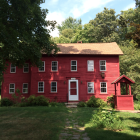
Raising questions about the exact scope of a proposal to list Waveny Park on the National Register of Historic Places, as well as some concerns about just what might follow from the designation, the Town Council on Wednesday night decided to postpone a vote for at least one more month. At one time, an effort led by the nonprofit New Canaan Preservation Alliance focused on listing just Waveny House and that century-old structure’s immediate environs on the National Register, though—with the thought that the park’s outbuildings and grounds, too, could benefit from an opportunity to get matching grants from the state for capital projects—the proposal has since expanded to include the entire park. But just what encompasses the “entire park” among the five contiguous parcels that form Waveny (see image at right) and whether New Canaan should seek to list all of it on the National Register in one shot are open questions, Town Council members said at their regular meeting, held in the Sturgess Room at the New Canaan Nature Center. Town Council member Kevin Moynihan said he was concerned about “potential negatives” of the listing, such as limiting what could be done on properties abutting Waveny if the designation was granted. “I recall that if you were following the Connecticut Siting Council’s approval of the Armory location for cell towers and the state historic preservation office used the Merritt Parkway’s designation on the National Register of Historic Places as a basis for restricting what could be done on state property adjacent to the National Historic place,” Moynihan said.

Waveny Poised for Listing in National Register of Historic Places

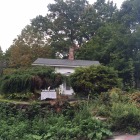
Waveny Park—crown jewel of New Canaan, gift of the Laphams and site of so many community touchstones, from youth sports, Mosley Hill and weddings to fireworks, nature hikes and sledding—is poised to take an important step toward listing in the National Register of Historic Places, following an informative public hearing Thursday night. Inclusion in the register puts no restrictions on the property and would allow New Canaan to apply for funds in the form of matching dollar-for-dollar reimbursement grants that could go toward restoring parts of the original Olmsted-designed landscape or work on Waveny House and its many outbuildings—planning, conditions assessments, architects’ fees and feasibility studies, state officials said during a meeting of the Town Council Land Use & Recreation Committee. Waveny is “in wonderful shape right now as far as its integrity is concerned, so you’re starting with a really good product,” said Mary Dunne, administrator of the State Historic Preservation Office. “And so I’m assuming you want to keep it that way,” added Dunne at the hearing, held in the Training Room of the New Canaan Police Department. Attended by more than 20 guests, the hearing followed two public meetings on the matter of listing Waveny on the National Register of Historic Places —first before the Park & Recreation Commission in May, then the full Town Council in July.

Preservationist: Impending Demo of Antique Summer Street Home Illustrates Need for More Coordinated Effort

A 168-year-old house on Summer Street appears to be headed for the wrecking ball, and though some local preservationists have spoken out against demolition, others are emphasizing rather that this latest teardown of an antique illustrates well New Canaan’s sore need for more nimble, effective processes regarding historic preservation. The 1,041-square-foot home at 167 Summer St. dates to about 1846, its tax assessor card says, and sits on a half-acre near Ed Dixon Memorial Park. It sold July 17 for $911,000. Two weeks later, the new owners—principals of two LLCs that include a New Canaan family and Stamford resident—filed an application to demolish the house and foundation.

Open Space Advocates, Preservationists Eye 4.43-Acre Property with ca. 1750 Home That May Soon Hit the Market

The owner of a ca. 1750 home on 4.43 acres on upper Valley Road says that the structure may soon go on the market—a noteworthy prospect for historic preservationists as well as the New Canaan Land Trust, which owns and maintains walking trails on an abutting property that also fronts the Grupes Reservoir. The first taxing district of Norwalk purchased 1124 Valley Road in February 2006 for $2.25 million, with the idea that it may move to that site an inconspicuous treatment plant now located near Silver Hill Hospital, according to James Fulton, the district’s attorney and owner of the parcel, as trustee. “We bought it and over the years, the more we considered it, we decided it probably wouldn’t be cost-effective to use it as part of the utility operation, which is why for years we’ve rented it out to residential tenants,” Fulton said. Though the district hasn’t made any firm decisions, “we are considering marketing the property for sale,” he added.

All Eyes on Roger Sherman Inn with New Prospect of Sale, Development

As news spread this week of the Roger Sherman Inn hitting the market at $6 million, one major question that preservationists and other locals are asking concerns the Oenoke Ridge property’s future—specifically, whether the inn itself could face the wrecking ball, to be replaced by a housing complex of some sort. Mimi Findlay, chairman emerita of the New Canaan Preservation Alliance notes that in recent years, New Canaanites have lost the Melba Inn on Park Street, Maples Inn on Oenoke and Silvermine Tavern. “So sad for New Canaan, architecturally, culturally and personally—where do my in-laws stay when visiting us?” Findlay told NewCanaanite.com in an email. Though the 1.8-acre property at 195 Oenoke Ridge Road cannot be subdivided because it’s in a one-acre zone, Town Planner Steve Kleppin said, concerns linger about development under the Affordable Housing Appeals Act, a state law that allows developers to skirt local planning decisions by designating a certain percentage of units in a proposed development as affordable. The law is triggered in municipalities where less than 10 percent of the housing stock is considered “affordable,” by the state’s definition.