Town Council Approves 2 Percent Increase to Operating Budget for Fiscal Year 2016

After some final trimming in some areas—notably, increases in police overtime and money for the schools—the Town Council on Wednesday voted to approve an operating budget of $141,211,088 for fiscal year 2016. The figure represents a 2 percent overall year-over-year increase in spending, including a 2.8 percent increase for the Board of Education. Calling this budget season the smoothest in recent memory—thanks in large part to the group’s leadership in Chairman Bill Walbert, Vice Chair Steve Karl and Secretary Kathleen Corbet, as well as Budget Director Jennifer Charneski and Finance Director Dawn Norton—councilmen also praised district officials for the granular level of insight they provided into spending on the schools. Even so, among themselves some debate emerged prior to the vote about a proposal to remove $100,000 from the district’s operating increase (which went through by a 7-4 vote). Calling it “intellectually unsatisfying” to have the funds removed arbitrarily with no explanation, particularly after so many months with multiple town bodies studying the budget, Councilman John Engel sought to preserve the school’s operating budget as it had been.
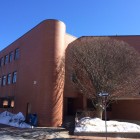
New Canaan Playhouse: Private Owner Would Have More Flexibility in ADA Compliance

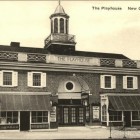
A new, private owner of the iconic Playhouse on Elm Street would have more flexibility in bringing the 1923 building to ADA compliance than its current owner—the town of New Canaan—does right now, public works officials say. Anyone who owns the cupola-topped brick structure will be responsible for ensuring it is ADA-compliant, Department of Public Works Director Michael Pastore told the Town Council on Thursday. The difference is that while the town is required to bring the building up to code now, a private owner is allowed to work in ADA upgrades with other renovations, and over time, he said. The Playhouse subject to ADA because the building is “considered a public space—people gather there and the town has the ultimate responsibility as the owner,” Pastore said during the legislative body’s regular meeting. “If we were to sell it off to private developer, they would still be responsible for keeping it in compliance with ADA.

Did You Hear … ?

We heard that the New Canaan Y has put off indefinitely its proposal to “bubble” the Waveny Pool for winter use while it undergoes an expansion that includes a new aquatic center. Officials at the Park & Recreation Commission say the Y is focusing on fundraising now while it works on a plan for its swimmers. ***

New Canaan High School 2014 grad Kit Mallozzi has been named to the Dean’s List at Syracuse University. Kit, winner of a Student Leadership Award as a NCHS senior, finished her first semester with the Orange with a perfect 4.0, proud father Rob Mallozzi said. “She just loves it there,” he said.

Town Seeks Reasons for Decline in Elderly Tax Relief Program Participation

Surmising that fewer elderly and disabled New Canaan homeowners are taking advantage of a tax relief program—at least in part—because they don’t know about it, town officials are trying to spread the word while calling for feedback from those who may qualify (see form below). Participants in New Canaan’s Tax Relief for the Elderly or Disabled program dropped from 137 in fiscal year 2008 to 62 in fiscal year 2013, according to data presented by the Town Council at its regular meeting Tuesday. Penny Young, co-chair of the Town Council Health & Human Services Committee, said officials “probably are not engaging in a sufficient way” in educating the community. “We need to reach out in a more visible way” and make it known that “the program exists for people to keep being part of it,” Young said at the meeting, held in the Sturgess Room at the New Canaan Nature Center. Here’s a look at program participation in recent years:


Other possible reasons for the decline, Young said in a memo to Town Council (see it here), include that some residents may view the program as a threat to their own self-sufficiency, possess assets beyond a qualifying income that would put them out of range, or are reluctant to disclose their finances.

Officials to Neighbors Concerned about Proposed ‘Greenway’: ‘There Is No Back Door to Crossing the Wetlands’

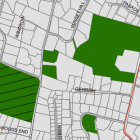
Concerned that a proposed 3-lot subdivision on Weed Street—and, separately but related, a planned public footpath that’s part of what open space advocates envision for the site—could negatively impact wetlands and aesthetics in the area, neighbors on Monday night urged officials at a public hearing to proceed carefully with approvals. Strictly speaking, the only proposal before the Inland Wetlands Commission now is for a moderately expanded driveway into the 9-acre lot just north of the intersection at Wahackme (and on the east side of Weed), beneath which new utility lines would be installed, for the two additional lots. That said, the overall site plan—which will require its own applications and hearings—calls for subdivision of the lot , as well as a conservation easement for a strip of land that open space advocates including the New Canaan Land Trust would like to use in order to create a new walk-able trail from the Nature Center to Weed Street in the area of Irwin Park. One neighbor on Weed Street, Dan Radman, told the commission during Monday’s hearing that he wanted “to be sure that if there is an approval to make, it is not the domino effect that it is already the first stepping stone into ‘understood subdivision’ and ‘understood pathway,’ which it should not be.”

Commission Secretary George Blauvelt assured him: “There is no back door into crossing the wetlands.”

“When they [members of the Land Trust] get to a point where they are actually ready to begin the approval process, they will have to come back to this commission and they will have to submit plans,” Blauvelt said at the public hearing, held in the Sturgess Room at the New Canaan Nature Center. “And the public will be invited to hear them and they will have to make their case as to why, if in fact their plans require crossing wetlands, why it would be a good thing, and it would be another opportunity for everyone to take a look.”

Ultimately, the commission decided not to take action on the driveway application, for two main reasons.